Chemical Shift Provides Which of the Following Types of Information
Which feature in the 1 H NMR spectrum provides information about the number of types of different protons in a compound. Through the difference in resonance frequency between water and fat protons at the same location are.

Propan 1 Ol Low High Resolution H 1 Proton Nmr Spectrum Of Analysis Interpretation Of Chemical Shifts Ppm Spin Spin Line Splitting H1 1 Propanol 1 H Nmr Doc Brown S Advanced Organic Chemistry Revision Notes
Which of the following is true for pair of diastereotopic protons.

. The diamagnetic and paramagnetic shielding on proton and carbon atoms is explained for the reader. Exhibit 13-1 The following questions pertain to the charting of. A number of signals B integral C multiplicity D chemical shift Provide the product of the following reaction.
Select all the statements that correctly describe chemical shift-----Chemical shift increases from right to left on a spectrum. Proton chemical shift anisotropy CSA is significantly important as it provides the information of the dynamics and local environmental structure of the proton. Chemical shift is determined relative to a reference signal.
The two peaks on the spectrum are located at d242 and d107. There are two peaks on the graph therefore of the 10 hydrogens in the molecule there are two types. This problem has been solved.
The chemical shiftprovides information into the chemical environment of the different hydrogen atoms in the molecule. The chemical shift of the carbon nuclei is determined by the electron density surrounding the nucleus. Since chemical shift increases from right to left a signal with a chemical shift of 42 ppm is described as being _____ when compared to a signal at 32 ppm.
What is chemical shift. One for the C H 3 group one for the C H 2 group. The integration for a signal is CDCl3 D3C O CD3 D2O.
Remembering that the chemical formula includes 5 carbons and one oxygen it is clear there is a good deal of symmetry to the molecule. As a rule of thumb a chemical shift seen at δ 10 ppm and an integration of 30 most probably indicates an alkyl group whose terminal is a CH 3. Both 1 and 2.
Chemical Shift Identity of neighbors. The chemical shift provides information about the structure of the molecule. Fat suppression smaller water fat shift high bandwidth in phase image SE sequences.
See the answer See the answer See the answer done loading. The chemical shift provides information regarding the chemical environment of the corresponding proton. During frequency encoding fat protons precess slower than water protons in the same slice because of their magnetic shielding.
When diluted with a non H-bonding solvent H-bonding becomes less important absorb even lower. Proton chemical shift anisotropy CSA is significantly important as it provides the information of the dynamics and local environmental structure of the proton. The typical chemical shift scale for proton NMR is 0-12 ppm.
Chemical shift depends on the operating frequency of the spectrometer. The terms upfield and downfield describe the relative location of signals in an NMR spectrum. Conjugated pi electron system.
The x-axis is the chemical shift δ expressed in parts per million ppm. Number of signals integral multiplicity chemical shift. And as you move to the left on an NMR spectrum youre talking about a higher chemical shift.
Netcraft is used to gather information about many aspects fo a system including operating system ip address and even country of origin. Electron density around the proton results in shieldingdeshielding effects so different types of protons aliphatic aromatic or aldehydic present in different. The measurement of proton CSA keeps drawing the attention of NMR researchers and great efforts have been expended.
A I B II C III D IV E none of these What would be the product of the following reaction. Downfield means to the _____ while upfield means to the _____. In the early years measuring proton CSA in solid-state NMR especially with the strong 1H-1H dipolar.
Which feature in the H NMR spectrum provides information about the number of neighboring protons of each proton in the compound. The measurement of proton CSA keeps drawing the attention of NMR researchers and great efforts have been expended. The parametric term is considerably.
Which of the following is used for identifying a. And the chemical shift would be would be a similar idea to the frequency. An aldehyde proton will show at 90 ppm and a carboxylic acid 110 ppm.
This is the relative position of proton peaks on the horizontal axis of an NMR spectrum and one of the ways in which structural information is extracted from NMR spectra. So a higher shift as you move to the left. In concentrated solns the protons are deshielded by H bonding and absorb at a relatively low field.
The common scale of chemical shifts is the α scale. NMR chemical shifts contain a vast amount of information on local electronic and structural environments and surprisingly their utilization for the determination of the coordination mode of zinc-ligated histidines has been limited so far to 15N nuclei. So the protons on benzene have a higher chemical shift than.
Proton Electronegativity Effect -Bond Effect Alkenes and aromatic compounds bearing -bonds will spend a portion of their time oriented with the plane defined by their sigma bonds perpendicular to the direction of the B o field. Neither 1 nor 2 D. Which feature in the 1H-NMR spectrum provides information about the relative number of each type of proton in a compound.
Chemical shift opposed phase image. Explain why all protons in a molecule do not absorb rf energy at the same frequency. Chemistry questions and answers.
So as you go to the right youre talking about a lower chemical shift. For example for the 1 H-NMR spectrum for ethanol CH 3 CH 2 OH one would expect signals at each of three specific chemical shifts. They will appear at the same chemical shift in an achiral ie nonchiral environment 2.
δ2 provides a reference-independent marker of this coordination mode. Show transcribed image text. The chemical shifts of O-Hs and N-Hs depend on the concentration.
The area under each peak is know as the integration. A broad peak will appear when protons exchange form 1 molecule to another during the NMR resonance during. Nuclear magnetic resonance spectroscopy provides information about a molecules.
The conversion of the raw data to this information is called assigning the spectrum. They will appear at the same chemical shifts in a chiral environment A. Chemical shift is measured in ppm.
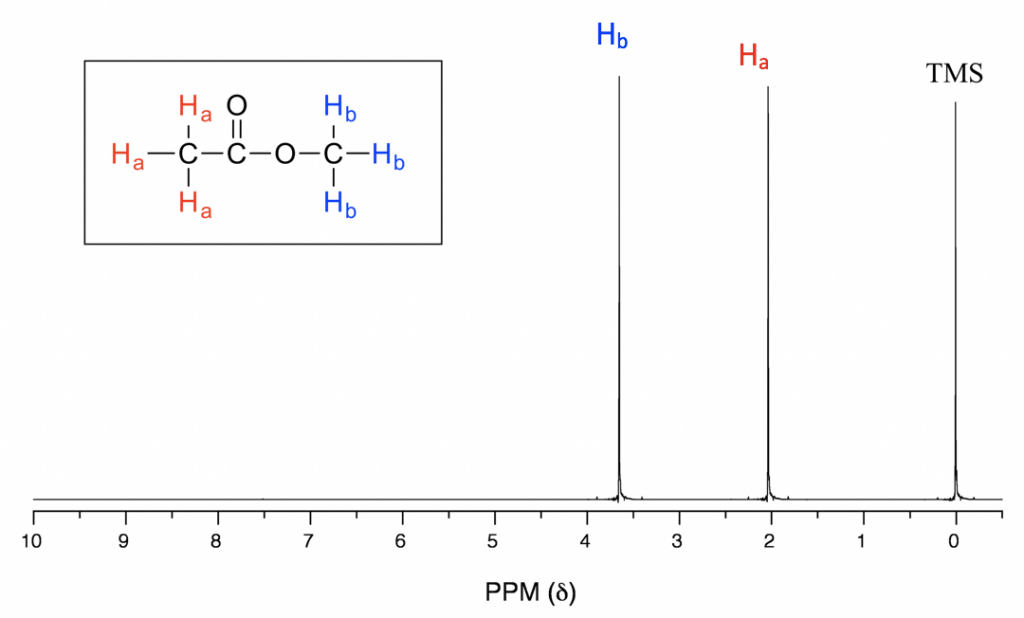
6 6 H Nmr Spectra And Interpretation Part I Organic Chemistry I

Ch 13 1h Nmr

Butan 1 Ol Low High Resolution H 1 Proton Nmr Spectrum Of 1 Butanol Analysis Interpretation Of Chemical Shifts Ppm Spin Spin Line Splitting H1 1 H Nmr Doc Brown S Advanced Organic Chemistry Revision Notes

Nmr Chemical Shift Ppm Upfield Downfield Chemistry Steps
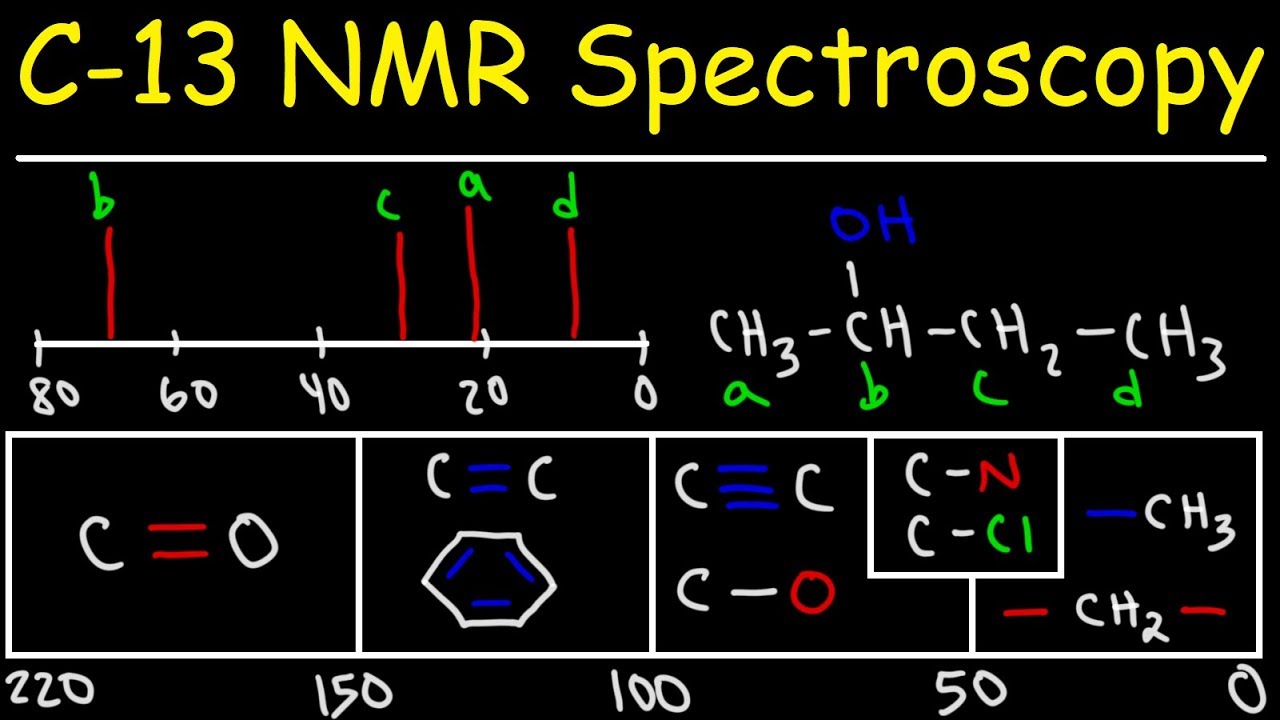
Carbon 13 Nmr Spectroscopy Youtube
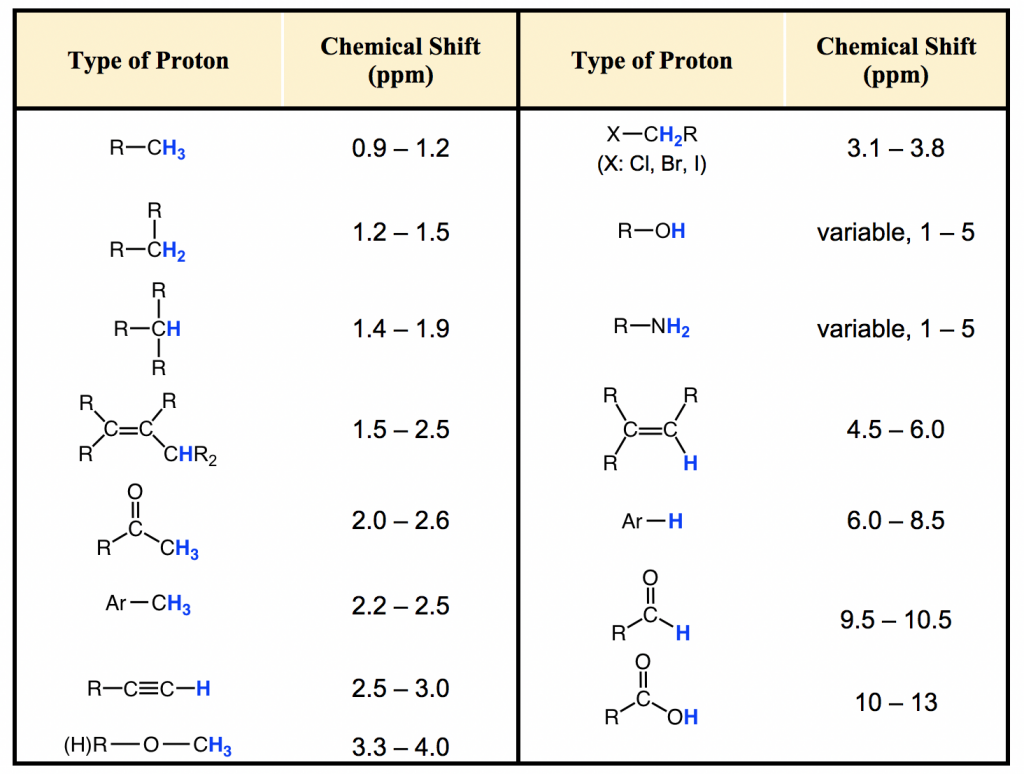
6 6 H Nmr Spectra And Interpretation Part I Organic Chemistry I

Chemical Shift In Nmr Spectroscopy Youtube
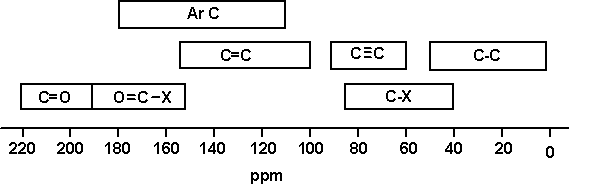
Ch 13 13c Nmr Spectroscopy

Nmr Chemical Shift Ppm Upfield Downfield Chemistry Steps

Nmr Chemical Shift Ppm Upfield Downfield Chemistry Steps

Ethanol Low High Resolution H 1 Proton Nmr Spectrum Of Ethanol Analysis Interpretation Of Chemical Shifts Ppm Spin Spin Line Splitting For Ethyl Alcohol Doc Brown S Advanced Organic Chemistry Revision Notes

Butan 1 Ol Low High Resolution H 1 Proton Nmr Spectrum Of 1 Butanol Analysis Interpretation Of Chemical Shifts Ppm Spin Spin Line Splitting H1 1 H Nmr Doc Brown S Advanced Organic Chemistry Revision Notes

13 12 More Complex Spin Spin Splitting Patterns Chemistry Libretexts
Tetramethylsilane An Overview Sciencedirect Topics

Nmr Chemical Shift Ppm Upfield Downfield Chemistry Steps
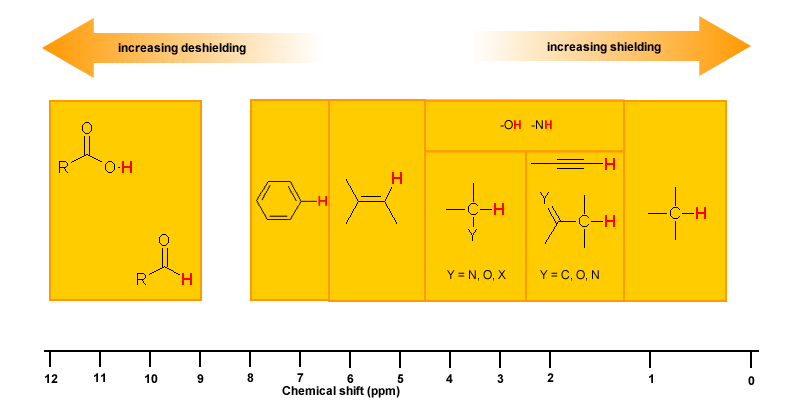
12 3 Chemical Shifts And Shielding Chemistry Libretexts

Pin On Nmr Spectroscopy Practice Problems

Chemical Shifts Proton
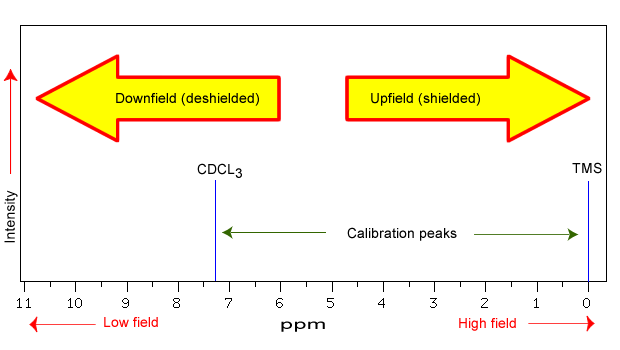
12 3 Chemical Shifts And Shielding Chemistry Libretexts


Comments
Post a Comment